

Many chefs and home cooks enjoy gas stove cooking for its precision and adaptability. The direct flame offers instant heat adjustment, essential for culinary precision. The best cookware for gas stoves considerably affects the efficacy of gas stove cooking. The market provides many materials and styles, each with pros and cons for cooking.
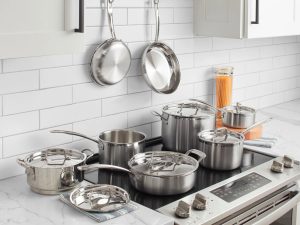
Stainless steel cookware is famous for gas stoves. Its key advantages incorporate strength, imperviousness to rust, and simplicity of upkeep. Excellent-intensity conduction makes stainless steel skillet cook food equitably. Unadulterated stainless steel has shortcomings, including lopsided intensity scattering that can cause hot patches. Stainless steel cookware with aluminum or copper centers helps here. This cunning blend utilizes these metals’ equivalent intensity scattering while at the same time holding stainless steel’s solidarity and appeal.
Cast iron is a traditional material known for its heat retention and consistent heating. Cast iron pans excel in searing and slow-cooking stews. Cast iron cookware is stable on gas burners but needs seasoning and maintenance to avoid corrosion and keep it non-stick. Fast cooks’ delayed temperature response may need to be fixed.
Gas stoves work well with copper cookware, especially for precise cooking. Copper’s high heat conductivity makes it heat up quickly and react instantly to temperature changes, making it suitable for precision heat-controlled dishes. However, copper is finicky, reacts with acidic meals, and needs regular polishing to look good.
Aluminum cookware is lightweight, inexpensive, and heats well on gas stoves. However, its acidic food sensitivity is concerning. Treatment makes aluminum more robust and less reactive, but it costs more.
Non-stick cookware with a Teflon-coated aluminum or stainless steel base releases and cleans food easily. Non-stick pans are great for delicate meals but don’t sear or brown well and require regular upkeep to keep their coating.
The design of gas stove cookware is essential. More expansive, flatter pans maximize stove heat, and thicker bases prevent warping and distribute heat evenly. Handle tangible matters, too. Metal handles are oven-safe and robust, whereas wooden or plastic grips keep cool but limit oven-finishing possibilities.
The choice of cookware should reflect the cooking style. If you frequently sear meat or cook at high temperatures, cast iron or stainless steel with a copper or aluminum core is great. Copper may be excellent for temperature-controlled dishes despite its maintenance requirements. If appropriately used, non-stick pans can help you cook low-fat.
Material, plan, upkeep, and cooking style are ideal. Each material has its excellencies, similar to the strength of stainless steel, the regular charm of cast iron, the exactness of copper, the moderateness of aluminum, and the straightforwardness of non-stick. Understanding these subtleties assists you with picking a gas stove that further develops your cooking experience.
Locating Safe Gas Stove Cookware: Health and Efficiency Options
Safety and performance are essential when choosing gas stove cookware. Cookware impacts food taste, quality, and kitchen safety. Gas stoves are popular because of their control and consistency, so knowing which cookware materials are safe is crucial.
Stainless steel leads to gas stove cookware safety. Even at high heat, stainless steel does not leach chemicals into food due to its non-reactivity. This makes it a solid choice for preparing many foods. Stainless steel’s toughness, rust, and corrosion resistance keep food safe from hazardous particles. However, heat conductivity might vary. Stainless steel cookware commonly has an aluminum or copper core or base to improve heat distribution while maintaining safety.
Durable and heat-retaining cast iron is a classic. A well-seasoned cast iron pan is naturally non-stick, minimizing oil use and improving health. Nonetheless, cast iron can leech iron into meals. This may benefit those with iron deficits but may be dangerous for those with hemochromatosis, which causes excess iron accumulation.
Copper cookware, known for its heat conductivity, allows precise and controlled cooking, avoiding the risk of under or overcooking food. When acidic foods react with copper, copper particles may be ingested. Modern copper cookware is lined with tin or stainless steel to prevent this reaction, but it needs frequent care to stay that way.
Aluminum cookware is popular because it’s lightweight, quickly warms, and economical. Aluminum, like copper, leaches into acidic meals. Due to its non-reactivity and durability, anodized metal is safer but more expensive.
Teflon-coated non-stick cookware is advantageous and utilizes less oil, which is sound. PTFE coatings can separate at high temperatures and make poisonous vapors that are hazardous whenever breathed in. Thus, non-stick cookware on gas stoves must be used carefully, with sufficient ventilation and low heat.
Cookware safety depends on stability and high-heat response. Gas stoves create a lot of heat; thus, cookware should not warp or degrade. Spills and burns are less frequent with heavy, solid cookware.
Also, consider handles for safety. Securely bonded heat-resistant handles make cooking safer. Metal handles can get hot on a gas burner, so use oven mitts or potholders. Silicone handles are cooler.
Hot spots that cause food to burn and stick can lead to smoke and fire hazards. Thus, cookware should be designed to distribute heat evenly. Lids must fit tightly to prevent steam burns and allow safe, easy cooking monitoring.
The most secure gas stove cookware requires adjusting materials, planning, and using ways of behaving. While cast iron and copper are beneficial, their receptive nature requires extra consideration. Stainless steel and anodized aluminum are protected and non-receptive. Non-stick cookware is advantageous but temperature-touchy. Cookware well-being relies upon its material, heat reaction, burner steadiness, and plan components. The right cookware can guarantee great feasts and a protected, sound cooking environment.
In conclusion, finding gas stove cookware that is safe is complicated. It involves knowledge of material properties and how they react to gas flame heat. The safest alternatives depend on food reactivity, heat distribution, stability, and handling safety. Stainless steel and anodized aluminum are non-reactive and stable, yet cast iron and copper are charming despite their unique needs. Balancing these aspects with your culinary style and health is crucial. Choosing the appropriate cookware makes gas burner cooking more fun, safer, healthier, and more efficient. This careful selection ensures your dishes are delicious and produced in a safe and healthy environment.


Leave a Reply
You must be logged in to post a comment.